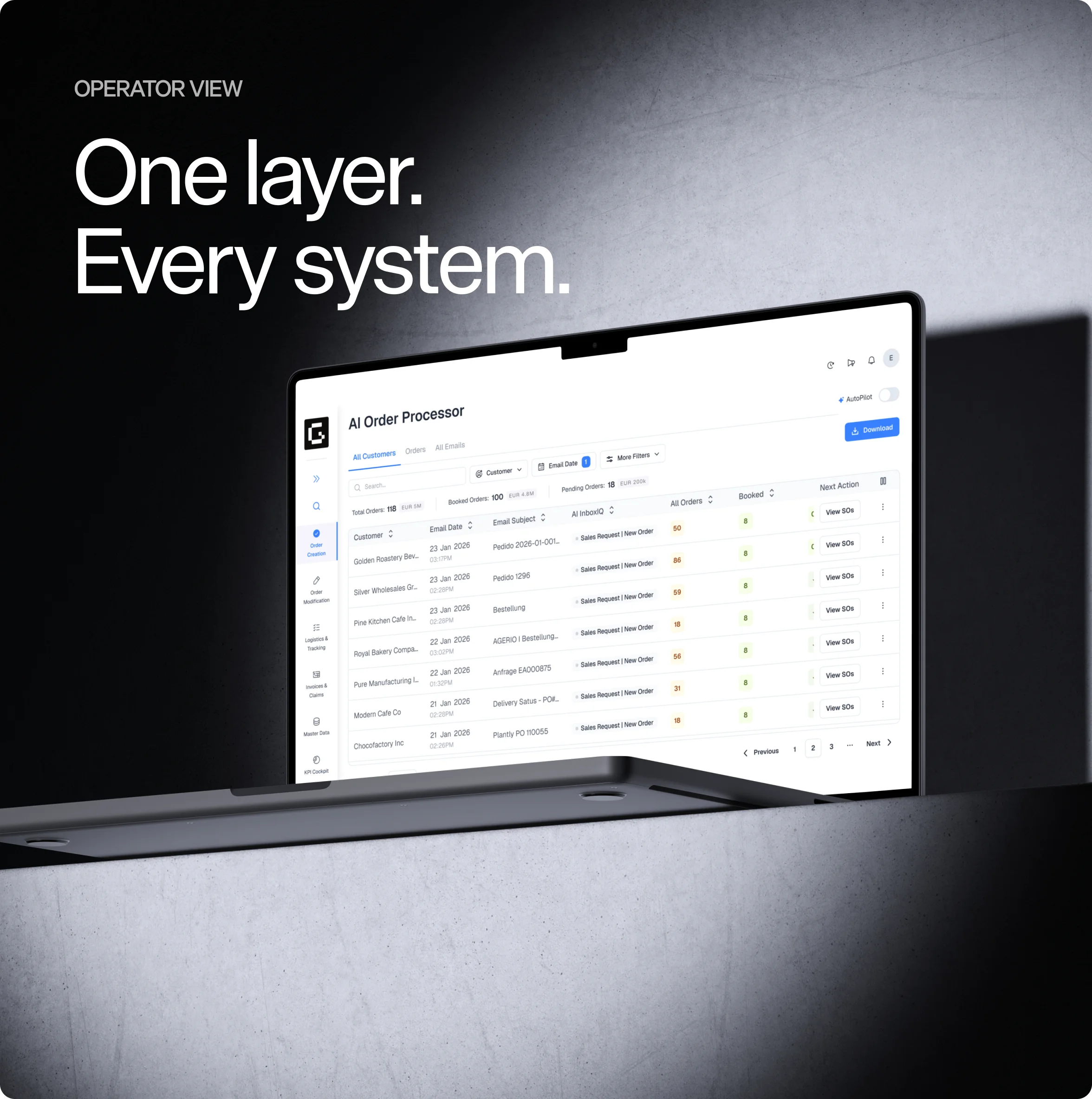
Purchase Order Management
Purchase order management is the systematic process of creating, issuing, tracking, and reconciling purchase orders across the procurement lifecycle. A purchase order is a formal document sent by a buyer to a supplier confirming the intent to purchase specific goods or services at agreed quantities, prices, and delivery terms. Effective purchase order management ensures that every purchase is authorized, traceable, and matched against invoices and goods receipts before payment. When managed through dedicated purchase order management software, PO management gives procurement and finance teams full visibility into outstanding commitments, pending deliveries, and spend against budget.
- Purchase order management covers the full lifecycle from PO creation through goods receipt and invoice reconciliation
- Manual PO management leads to duplicate orders, missed deliveries, and invoice mismatches that cost businesses 1–3% of procurement spend
- Purchase order management software centralizes PO tracking, automates approvals, and connects directly to your ERP
- Effective PO management requires a unique purchase order number for every order to enable tracking and three-way matching
- Organizations with mature PO management processes report 40–60% fewer invoice exceptions
- Modern PO management integrates with AP automation — validated POs feed directly into invoice matching workflows
How the Purchase Order Process Works
The purchase order process follows a structured workflow designed to control spend and create an audit trail for every purchase:
3. PO Creation
Once approved, the system generates a purchase order with a unique purchase order number. This PO number becomes the reference ID that connects the order to every downstream document — goods receipt, packing list, and invoice.
6. Three-Way Matching
The PO, goods receipt, and supplier invoice are compared through three-way matching. When all three match within tolerance, the invoice is approved for payment. Discrepancies are flagged for review.
Why PO Management Matters
Without structured purchase order management, procurement operates blind. Here's what breaks down:
Duplicate and unauthorized purchases
Without a centralized PO system, different departments order the same items from different suppliers at different prices. A purchase order sample or template doesn't solve this — you need a system that enforces one PO per approved requisition.
Invoice matching failures
When invoices arrive without a corresponding PO number, AP teams have to manually investigate. This is the single biggest cause of invoice processing delays. Organizations running purchase order tracking software reduce invoice exceptions by 40–60%.
No spend visibility
If POs live in spreadsheets and email threads, finance can't forecast cash commitments accurately. Purchase order management software provides real-time dashboards showing outstanding PO value, pending deliveries, and budget consumption by category.
Compliance gaps
Auditors need to see that every purchase followed the approved procure-to-pay workflow. Manual processes create gaps in the paper trail. Automated PO management generates a complete audit trail from requisition through payment.
Choosing Purchase Order Management Software
When evaluating a purchase order program or purchase order management software, these capabilities matter most:
Real-time PO tracking
Purchase order tracking software should show the status of every PO: created, sent, acknowledged, partially received, fully received, invoiced, paid, closed. This is how you understand a purchase order works end-to-end.
ERP integration
PO data should sync bidirectionally with your ERP. When a PO is created, it should appear in your ERP's commitment register. When goods are received, the ERP inventory updates. Purchase order software that operates in isolation creates reconciliation headaches.
Supplier communication
The best purchase order management software includes a supplier portal or automated notifications so suppliers can acknowledge POs, provide delivery updates, and submit invoices referencing the PO number.
PO Management vs. PO Automation
Purchase order management and purchase order automation are related but distinct. PO management is the process — creating, tracking, and reconciling orders. PO automation uses AI and software to handle parts of that process without human intervention — creating an automated purchase order workflow.
For example: PO management means having a system where every order has a PO number and follows an approval workflow. PO automation means that when a supplier sends an order confirmation, AI extracts the data, matches it against the PO, flags discrepancies, and updates the ERP — without anyone touching a spreadsheet.
Most organizations start with PO management (getting the process right) and then layer on automation (making the process faster). The two compound: automation works best when the underlying management process is well-structured, and management becomes easier when automation handles the repetitive matching and data entry.
Common Purchase Order Management Mistakes
Even organizations with purchase order management software in place make mistakes that erode the value of their PO process. These are the most common — and the most expensive:
No PO, no problem (until audit)
Allowing purchases without a corresponding purchase order is the fastest way to lose spend visibility. Every unmatched invoice becomes a manual investigation. Enforce a no-PO-no-pay policy and configure your system to reject invoices that lack a valid PO reference.
Stale open POs
Purchase orders that were never fulfilled — cancelled orders, changed requirements, abandoned projects — sit open in the system and distort commitment reporting. Finance sees inflated outstanding liabilities; procurement sees phantom demand. Run a monthly review of POs older than 90 days and close or amend those that will never be fulfilled.
Inconsistent PO formats
When different departments use different purchase order templates — or worse, free-text emails — suppliers receive inconsistent instructions and downstream matching breaks. Standardize on a single purchase order format with mandatory fields: line-item descriptions, quantities, unit of measure, unit prices, GL codes, and delivery instructions.
Approval bottlenecks
Requiring senior approval for every purchase order, regardless of value, creates delays that push buyers toward workarounds. Set meaningful approval thresholds based on your spend distribution. Low-value, routine purchases (office supplies, standard reorders) should auto-approve; high-value or non-standard purchases warrant review.
Ignoring partial deliveries
Suppliers frequently ship in multiple batches. If your system only records full deliveries, partial shipments create phantom discrepancies at three-way matching time. Ensure your goods receipt process supports partial delivery tracking against the original PO.
No supplier feedback loop
PO management is a two-way process. If suppliers can't easily confirm POs, flag problems, or update delivery timelines, discrepancies pile up until the invoice arrives. A supplier portal or automated notification system closes this loop.
Measuring Purchase Order Management Performance
You can't improve what you don't measure. These KPIs tell you whether your PO management process is working — and where to focus improvement efforts:
PO cycle time
The elapsed time from requisition submission to PO dispatch. Best-in-class organizations complete this in under 24 hours for routine purchases. If your average exceeds 5 days, approval workflows are the likely bottleneck.
First-pass match rate
The percentage of invoices that pass three-way matching on the first attempt without manual intervention. Target 85%+ for mature PO management processes. Below 70% signals systemic issues: inconsistent PO data, missing goods receipts, or supplier billing errors.
Exception rate
The percentage of POs that generate at least one exception (quantity mismatch, price variance, missing receipt). Track by exception type to identify root causes. A high price-variance exception rate points to PO creation errors; a high quantity-mismatch rate points to receiving process gaps.
PO compliance rate
The percentage of purchases that go through the formal PO process vs. maverick purchases without POs. Track this as a leading indicator — declining compliance means your process is too cumbersome or your team is finding workarounds.

Your operations, on autopilot.
GeneralMind handles procure-to-pay and order-to-cash end-to-end — 98% decision accuracy, full auditability, zero manual steps. See it live in 30 minutes.
Book a demoHow GeneralMind Handles Purchase Order Management
GeneralMind connects to your ERP to read PO data — line items, quantities, prices, delivery terms — and uses it as the foundation for automated document processing. When supplier documents arrive (order confirmations, advance ship notices, invoices), GeneralMind extracts the data, matches it against your POs using three-way and four-way matching, and routes exceptions to the right person.
Our solution handles the PO management complexities that trip up simpler tools: partial deliveries tracked against the original PO, multi-line orders with mixed fulfilment status, and supplier-side amendments that need to be reconciled against the original terms. Every match decision is logged with the data it was based on — giving your audit team a complete trail from requisition through payment.
The result: your PO management process runs on autopilot for 80%+ of transactions, with human review only where it's genuinely needed. Native integrations with SAP, NetSuite, Dynamics 365, Sage, and Infor mean PO data stays synchronized in real time — no middleware, no CSV uploads.
Frequently Asked Questions
Purchase order management is the process of creating, issuing, tracking, and reconciling purchase orders across the full procurement lifecycle. It ensures every purchase is authorized, traceable, and matched against deliveries and invoices before payment.
A purchase order number is a unique identifier assigned to each purchase order. It serves as the reference that connects the PO to the goods receipt, supplier invoice, and payment — enabling three-way matching and full audit traceability.
The best purchase order management software automates approval routing, generates unique PO numbers, provides real-time tracking, and integrates natively with your ERP. Evaluate based on how well it handles your specific PO volume, approval complexity, and ERP system.
A purchase order starts with a requisition, goes through approval, is issued to a supplier with a unique PO number, triggers goods receipt when delivered, and is matched against the supplier invoice before payment. Each step creates an auditable record.
PO management is the process of tracking and controlling purchase orders. PO automation uses AI to handle parts of that process without human intervention — extracting data from supplier documents, matching against POs, and routing exceptions automatically.
A purchase requisition is an internal request to buy something — it stays within the organization and triggers the approval process. A purchase order is the external, legally binding document sent to the supplier after the requisition is approved. The requisition asks for permission; the PO commits to the purchase.
Effective PO tracking requires a centralized system where every order has a unique purchase order number and a visible status: created, approved, dispatched, acknowledged, partially received, fully received, invoiced, and closed. Purchase order tracking software provides real-time dashboards showing these statuses across all open POs, flagging overdue deliveries and aged orders automatically.
The most common causes are: the invoice references a PO number that doesn't exist in the system, quantities on the invoice exceed the goods receipt, unit prices differ from the PO, the goods receipt hasn't been recorded yet, or the PO was never created for the purchase. Each failure type has a different root cause and resolution path.
When every purchase has a PO, finance teams can forecast cash outflows based on outstanding PO commitments — before invoices arrive. This forward visibility enables tighter cash management, better timing of payments to capture early-payment discounts, and more accurate working capital planning.